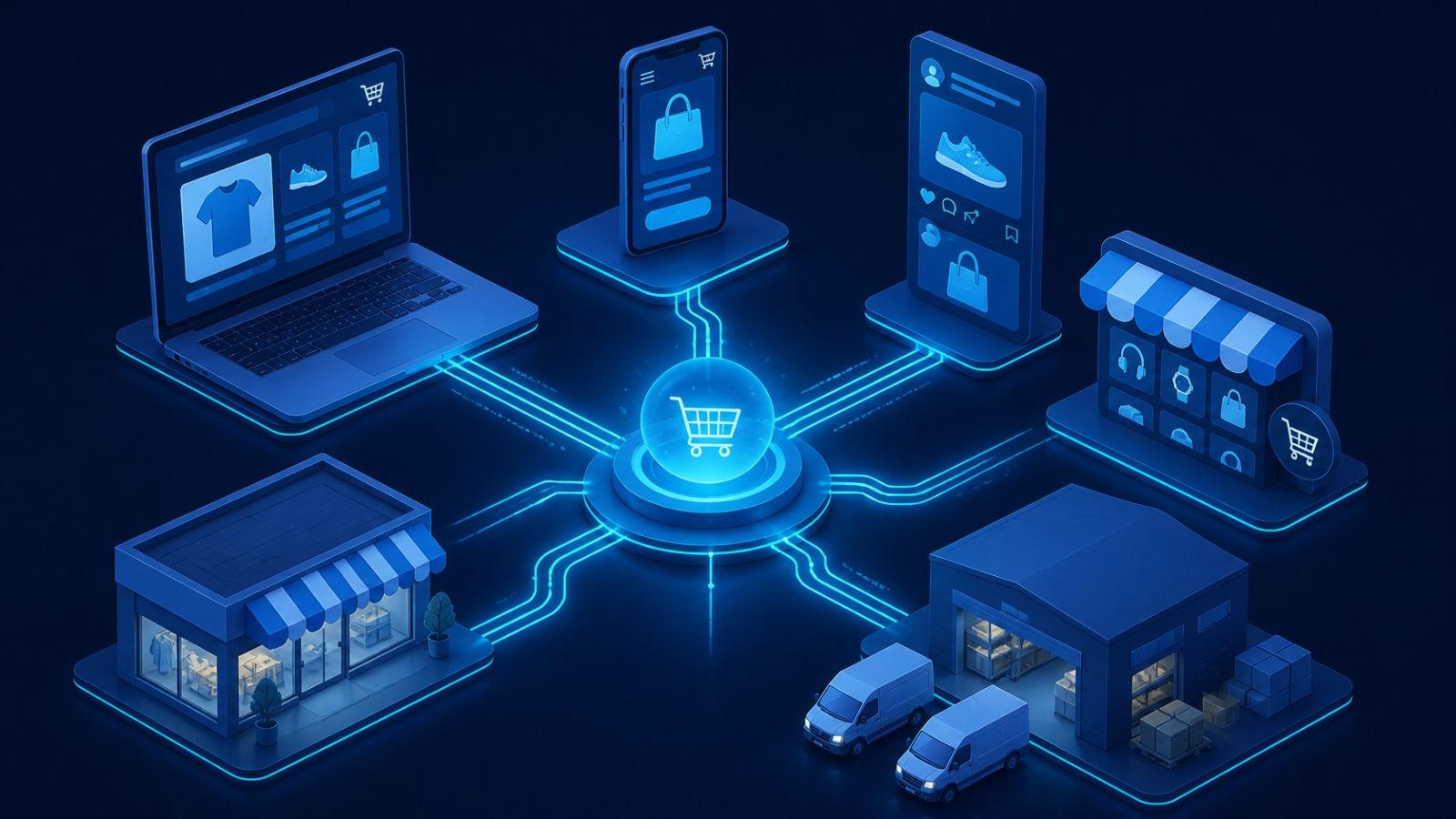





This guide explains how the portal runs, which trade terms shape your margin and what changes in the UK and Europe, so you can judge whether the 1P route fits your brand.
What Is Amazon Vendor Central?
Amazon Vendor Central is the invitation-only portal that brands and distributors use to sell their products wholesale to Amazon. Amazon issues purchase orders, takes ownership of the stock and resells it to shoppers as the retailer. Product listings then show Amazon as the seller, because Amazon, not the brand, is the seller of record.
This relationship is known as first-party or 1P selling. The alternative is third-party or 3P selling, where an independent seller owns the offer on the marketplace. That is the route Pattern takes with its 3P marketplace accelerator: we buy your inventory and sell it on Amazon ourselves, rather than supplying Amazon Retail.
How Does Vendor Central Work for Brands?
Vendor Central works for brands like a traditional retail account: Amazon buys, you supply, and the portal records every step of that trade.
Your team confirms orders, ships stock, submits invoices and settles disputes, while Amazon handles the retail offer, customer service and delivery to the shopper. The two subsections below cover the order cycle and the fulfillment models available to vendors.
How Do Vendor Central Purchase Orders Work?
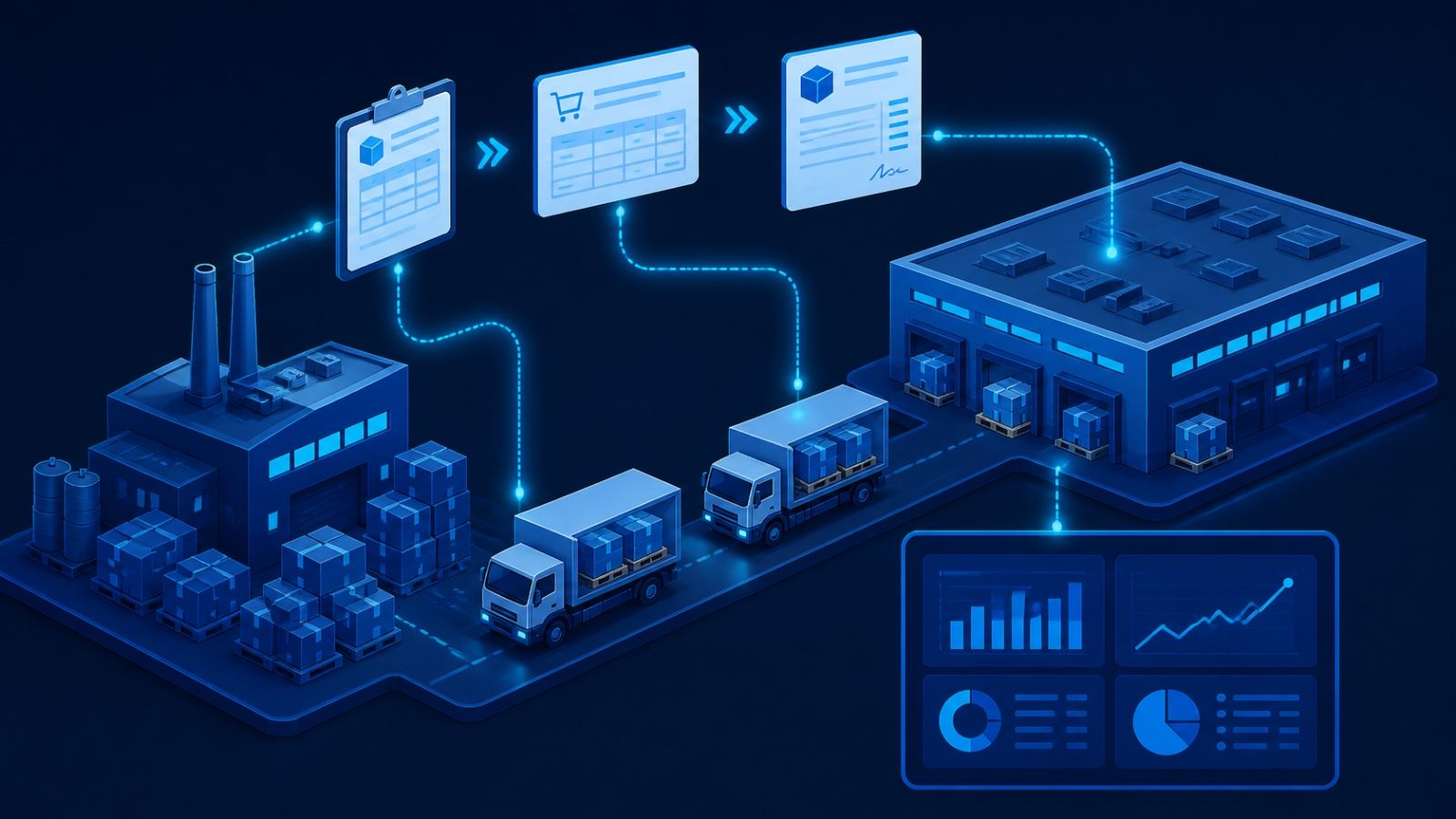
Vendor Central purchase orders work in a fixed cycle in which Amazon's demand forecast, not a shopper's order, triggers each shipment. The cycle runs in five steps:
- Purchase order: Amazon issues a PO per ASIN, quantity and fulfillment centre.
- Confirmation: You accept, adjust or reject each line within Amazon's response window.
- Shipment: You ship to the booked delivery appointment with compliant labels and an advance shipment notice (ASN).
- Invoice: You invoice Amazon for the units it receives.
- Payment: Amazon pays on the agreed terms, minus co-op and any chargebacks.
Late, short or mislabelled shipments trigger operational chargebacks, so fill rate and on-time delivery matter as much as sales volume.
Which Fulfillment Models Can Amazon Vendors Use?
Amazon vendors can use four fulfillment models, depending on their size and supply chain:
- Standard purchase orders: You ship pallets or cartons to Amazon fulfillment centres, and Amazon delivers to shoppers.
- Direct Fulfillment: Stock stays in your warehouse and you ship each order straight to the shopper, while Amazon remains the seller.
- Vendor Flex: Part of your warehouse operates as an Amazon fulfillment site, an option Amazon usually offers to large vendors.
- Direct Import: Amazon arranges international transport and import for your goods, a programme limited to products sourced from Asia.
How Do You Become an Amazon Vendor?
You become an Amazon vendor through an invitation from Amazon's retail team, because Vendor Central has no public sign-up. Amazon invites manufacturers and distributors it wants to source from directly.
Strong sales as a third-party seller, a registered brand, healthy reviews and the capacity to fill wholesale-scale purchase orders are the signals that usually lead to an invitation.
How Does Amazon Vendor Registration Work?
Amazon vendor registration starts with the invitation email and a guided setup in the Vendor Central portal. During setup, you accept Amazon's vendor terms and provide business details for review. Requesting changes to the standard agreement can delay approval considerably. Amazon typically asks for the following information:
- Business address: Your registered address and primary warehouse location.
- Bank details: The account Amazon pays your invoices into.
- Tax information: Your tax identification and supporting documents.
- Key contacts: The people responsible for orders, finance and catalogue content.
- Trademark details: Proof of the registered trademark for your brand.
How Do Trade Terms Work in the Amazon Vendor Program?
Trade terms in the Amazon vendor programme define what Amazon pays for your products and what it deducts afterwards. Your cost price is only the starting point. Amazon then recovers allowances for marketing, freight and damage, and adds operational chargebacks when shipments miss its standards.
These terms decide your real margin, so the next three subsections look at co-op, Net PPM and the annual negotiation.
How Does Co-op Funding Work in Vendor Central?
Co-op funding in Vendor Central is a set of negotiated deductions that Amazon takes from the payments it owes you. Amazon books co-op as Contra-COGS, a reduction of its cost of goods, and usually accrues it against the units its fulfillment centres receive. Co-op and its related agreements cover four main areas:
- Marketing: Funding for promotions and on-site visibility.
- Freight allowance: A contribution when Amazon arranges inbound transport.
- Damage allowance: Compensation for units damaged or returned.
- Price protection: Recovery of the difference on stock Amazon holds when you lower your cost price.
Because Amazon bills against the units it received in a given month, your own shipment records rarely match the co-op invoice line for line.
Why Does Net PPM Matter to Amazon Vendors?
Net PPM matters to Amazon vendors because it is the margin figure Amazon uses to decide which products it keeps ordering. Net pure product margin shows Amazon's profit on an item after your cost price and trade deductions. When Net PPM stays low, an ASIN risks the CRaP label ("Can't Realise a Profit"), and Amazon can stop placing purchase orders for it.
What Happens During Amazon Vendor Negotiations?
Amazon vendor negotiations are the annual review in which Amazon and the vendor reset cost prices and trade terms for the coming year. Both sides bring data on margin, growth and operational performance to the table.
Brands that know their full cost of serving Amazon, including chargebacks and team time, can push back with evidence. Our guide on how to win Amazon vendor negotiations covers that preparation in detail.
What Does Vendor Central Analytics Show?
Vendor Central analytics shows how Amazon sells your products, through two connected toolsets. Retail Analytics covers sales, traffic, inventory, forecasts and Net PPM for your catalogue.
Brand Analytics, available to vendors enrolled in Amazon Brand Registry, adds shopper behaviour such as top search terms, repeat purchases and market basket data. Brand Analytics replaced Amazon Retail Analytics Premium, which vendors once had to pay for, when Amazon opened that data up in 2020.
One detail often causes confusion in reporting. The sourcing view shows sales of the stock Amazon bought from your account, while the manufacturing view includes units Amazon sourced from other distributors of your brand.
What Support Do Amazon Vendors Receive?
Amazon vendors receive support through two channels, depending on the size of the account. Larger vendors usually work with a vendor manager in Amazon's retail team.
Most other vendors raise cases through the Support Hub in Vendor Central and track the answers in the case log. Either way, the speed of support depends heavily on how clearly you document each issue.
What Is Amazon Vendor Services?
Amazon Vendor Services (AVS) is a paid, invitation-only support programme in which Amazon assigns a dedicated specialist to a vendor account. The programme was previously called Strategic Vendor Services.
Vendors often receive the AVS offer during their annual negotiation, and contracts typically run for a minimum of 12 months. The specialist works for Amazon, which is worth keeping in mind when you set goals for the relationship.
What Is Different About Amazon Vendor Central UK?
Amazon Vendor Central UK runs on its own portal at vendorcentral.amazon.co.uk, separate from the portals for other Amazon stores.
Each Amazon store has its own Vendor Central address, such as vendorcentral.amazon.de for Germany and vendorcentral.amazon.fr for France. Because Amazon is the seller of record, it handles VAT on its retail sales to UK shoppers, so you invoice Amazon rather than consumers.
How Does Vendor Central Europe Move Stock Across Borders?
Vendor Central Europe moves stock across borders through Amazon's pan-European ordering, which treats its EU stores largely as one inventory pool. Stock you sell to Amazon in one country can end up serving shoppers in Germany, Italy or Spain. That reach is useful, but the reporting in your account mainly shows sell-through in your own vendor country.
Amazon also looks for the lowest-cost source of the same product across its European accounts. If your cost prices differ per country, Amazon can buy more through the cheapest one and supply other stores from there. Aligning your terms across your European vendor accounts prevents that from happening by accident.
How Does Vendor Central Compare to Seller Central?
Vendor Central compares to Seller Central as a wholesale relationship compares to running your own shop. In Vendor Central, Amazon buys your products and becomes the retailer. In Seller Central, a third-party seller lists and sells to shoppers directly, using Amazon's FBA service or its own logistics. The table shows the main differences.
The full trade-offs between both models go beyond Vendor Central itself. Our breakdown of Amazon 1P vs 3P pros and cons weighs margin, control and workload side by side.
Is Amazon Scaling Back Vendor Central?
Amazon is scaling back Vendor Central in terms of the number of vendors it works with, not as a channel. In late 2024, Amazon told a group of 1P vendors it would stop sourcing from them, with the first notices taking effect in November 2024.
Amazon described this as a routine review of its product offering, and invited many affected brands to continue as third-party sellers. The 1P channel itself remains large. The third-party share of paid units on Amazon fell to 60% in the first quarter of 2026, its second quarterly decline in a row, largely driven by grocery growth through Amazon's own network.
For vendors, the shift is about selectivity: Amazon concentrates on suppliers whose products deliver the margin and volume it expects. Pressure on vendor terms is not new in Europe either.
In our own Amazon EMEA vendor research from 2022, 98% of the nearly 100 brands surveyed reported problems trading on Amazon in the previous year. Nearly half pointed to unfavourable commercial terms.
When Does a 3P Partner Make More Sense Than Vendor Central?
A 3P partner makes more sense than Vendor Central when your brand wants Amazon growth without the workload of purchase orders, deductions and annual negotiations. That applies to brands whose vendor terms keep tightening, brands that lost their vendor account, and brands that want to reach more marketplaces than Amazon alone.
Pattern works as that 3P partner. We buy your inventory, so we only grow when your brand grows, and we run advertising, content and fulfillment under one roof across 70+ marketplaces in 100+ countries. Your team keeps full visibility on performance through our data platform. See how Sage moved from 1P to 3P with Pattern.
Weighing up your next step on Amazon? Book a strategy call with our team to see what a 3P partnership could look like for your brand.
Frequently Asked Questions
Where Do UK Brands Log in to Vendor Central?
UK brands log in to Vendor Central at vendorcentral.amazon.co.uk, using the credentials set up after Amazon's invitation. Each Amazon store has its own Vendor Central address, so a brand supplying Amazon Germany uses vendorcentral.amazon.de. Vendor Central and Seller Central are separate portals, each with its own account.
Can Amazon Vendors Also Sell as Third-Party Sellers?
Amazon vendors can also sell as third-party sellers, a setup known as a hybrid model. Many brands keep core products on Vendor Central and use Seller Central for launches, bundles or items Amazon does not order. A hybrid model works best with a clear split per ASIN, so your 1P and 3P offers do not compete on the same listing.
Do Amazon Vendors Set Their Own Retail Prices?
Amazon vendors do not set their own retail prices, because Amazon is the retailer of the stock it buys. The vendor agrees a cost price with Amazon, and Amazon decides independently what shoppers pay. Amazon's pricing systems then adjust that retail price over time.
Can Amazon End a Vendor Central Relationship?
Amazon can end a Vendor Central relationship by deciding to stop sourcing from a vendor. In late 2024, Amazon ended a number of vendor relationships after what it called a routine review, and invited many of those brands to sell as third-party sellers instead. Keeping a Seller Central account ready reduces the impact of such a decision.
What Happened to Amazon Vendor Express?
Amazon Vendor Express was an open-enrolment wholesale programme that Amazon launched in 2015 and later retired. Amazon announced the closure in March 2018 and shut the programme down permanently on 1 January 2019. Since then, brands can sell to Amazon only through the invitation-only Vendor Central or sell directly as third-party sellers through Seller Central.