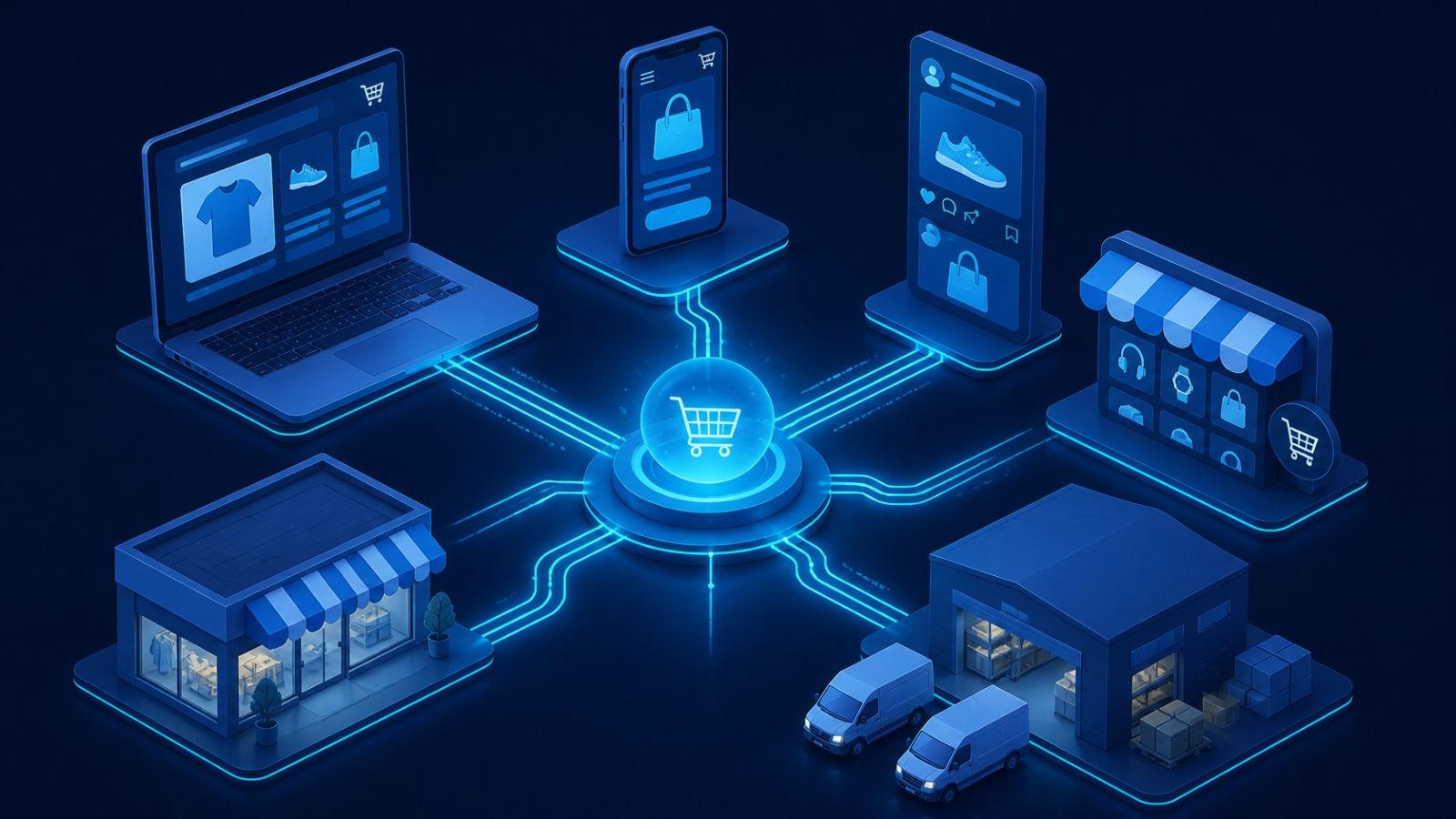
The approach rests on shared stock, shared product data and fulfillment that can serve an order from any channel. This article explains how omnichannel ecommerce works, where marketplaces fit and what it takes to run it well.
What Is Omnichannel Ecommerce?
Omnichannel ecommerce is a selling model in which all of a brand's channels share one operational base: one view of inventory, one source of product data and one order flow.
Many brands hand the marketplace side of that base to a marketplace accelerator that holds stock and runs those channels, and connect their own webshop and retail partners to the same operation. Marketplaces such as Amazon and Zalando, a direct-to-consumer webshop, social commerce and physical retail all draw on that base instead of running as separate businesses.
For the shopper, the result is one consistent brand experience: product details match on every channel, stock information is reliable and a delivery promise made on one channel holds on the next.
Omnichannel vs Multichannel Ecommerce: What Is the Difference?
The difference between omnichannel and multichannel ecommerce lies in how the channels relate to each other. Multichannel ecommerce means selling on several channels, each with its own stock, listings and processes. Omnichannel ecommerce connects those channels so they share inventory, product data, order routing and customer insight.
Multichannel is a decision about reach, while omnichannel is a decision about the operation behind that reach. A common path is to start multichannel and move towards omnichannel once separate channels cost more time than they return, a shift we cover in our guide to multichannel ecommerce management.
| Factor |
Multichannel ecommerce |
Omnichannel ecommerce |
| Main goal |
More reach through more channels |
One connected operation across channels |
| Inventory |
Separate stock or manual allocation per channel |
One stock view that every channel draws on |
| Product data |
Listings maintained per channel |
One source of content, adapted per channel |
| Order handling |
Each channel processes its own orders |
Orders routed to the best stock location |
| Customer insight |
Data stays within each channel |
Performance compared across channels |
| Organisation |
Teams organised by channel |
Teams organised around the brand and the shopper |
Where Do Marketplaces Fit in Omnichannel Ecommerce?
Marketplaces fit in omnichannel ecommerce as both a sales channel and a source of operational infrastructure. Amazon and Zalando bring the demand, while their fulfillment and partner programmes let brands connect stock that also serves other channels.
Zalando shows how far this goes. Its Connected Retail programme let physical stores sell their stock on Zalando, and it is now being folded into the zDirect partner programme, with the old Connected Retail technology phased out in June 2027.
For a brand, the practical question is which role each marketplace plays: discovery, volume, a specific category or a specific country. That role decides how much stock, content and attention the marketplace receives within the omnichannel set-up.
What Does an Omnichannel Ecommerce Operation Need?
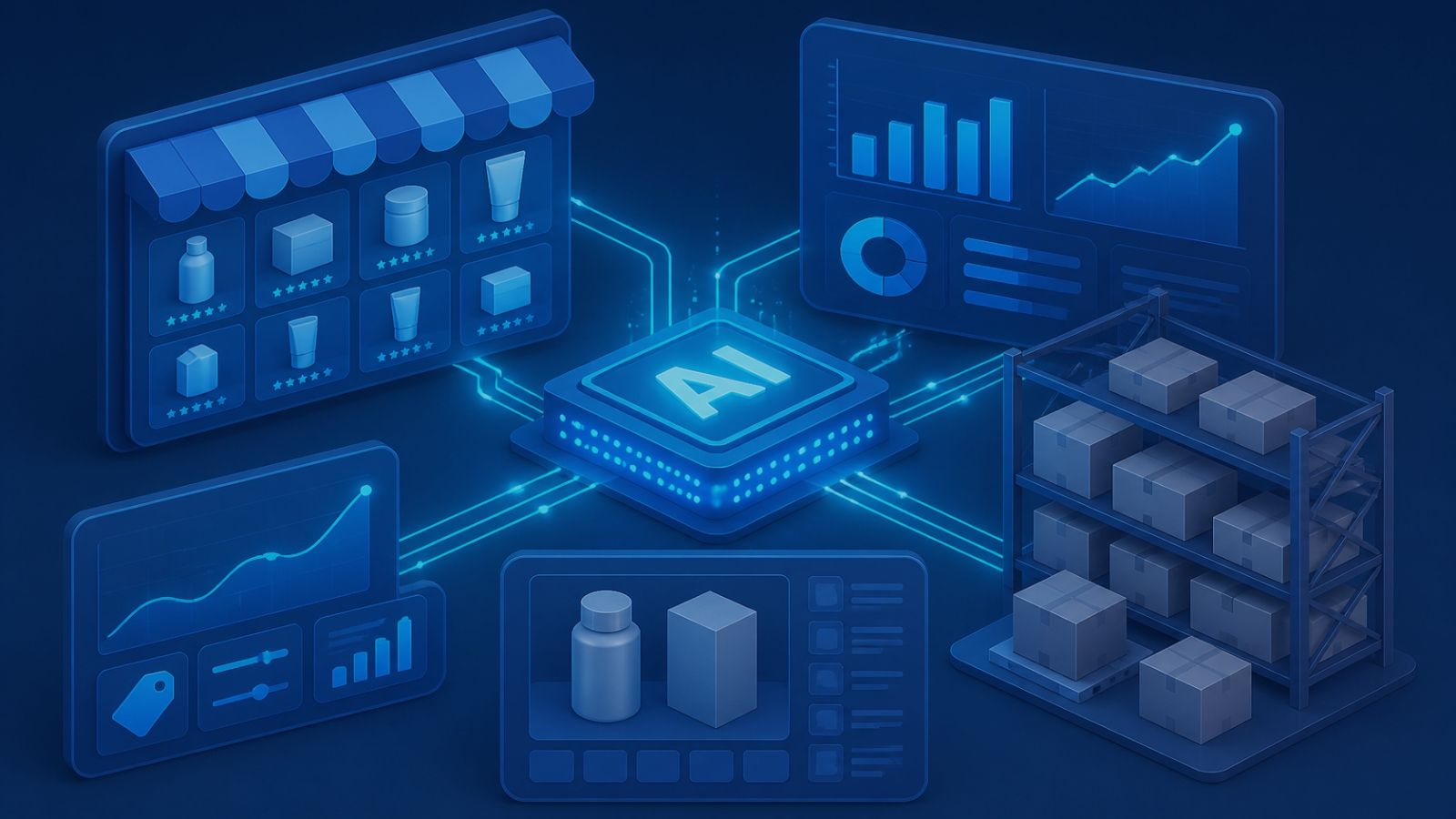
An omnichannel ecommerce operation needs three connected building blocks: shared inventory visibility, one source of product data and order management that routes every order. Without them, each new channel adds work instead of reach.
The tools differ per brand, but the building blocks stay the same whether a brand sells on two channels or twenty. Brands usually put them in place in this order, because product data and stock accuracy determine what every later system can do.
Omnichannel Inventory Visibility
Omnichannel inventory visibility means every channel works from the same, current stock position. When a marketplace, a webshop and a retail partner each count stock separately, one channel can sell an item another channel has already sold.
A shared stock pool, or clearly reserved stock per channel, prevents overselling and lets slow-moving stock reach the channel where demand sits.
Product Data for Every Omnichannel Touchpoint
Product data for every omnichannel touchpoint comes from one source: titles, descriptions, images and attributes are created once and adapted per channel.
Each marketplace has its own content rules, so the same product needs a different format on Amazon, Zalando and a webshop. A product experience management system combines a PIM, digital asset management and syndication to keep those versions aligned.
Omnichannel Order Management
Omnichannel order management decides where each order is fulfilled from. An order management system (OMS) collects orders from every channel, checks stock across warehouses and stores, and routes each order to the location that can deliver it fastest and most efficiently.
The same system handles returns, so an item bought on one channel can be returned through another without manual work.
How to Build an Ecommerce Omnichannel Strategy?
Building an ecommerce omnichannel strategy starts with the shopper and works back to the operation. The four steps below follow the order in which the decisions depend on each other: channels first, then channel roles, then systems, then measurement.
Skipping a step tends to surface later as stock errors, inconsistent listings or channels that compete for the same shopper. A strategy written down this way also makes it easier to decide whether to run the operation in-house or with a partner.
Choose the Channels for Your Omnichannel Strategy
Choosing the channels for your omnichannel strategy starts with where your customers already buy, not with every channel available.
Look at marketplace demand in your category, the countries you sell in and the role of your own webshop. Two or three well-connected channels are easier to run well than six that each operate on their own.
Define the Role of Each Channel in Your Omnichannel Mix
Defining the role of each channel in your omnichannel mix stops channels from competing for the same shopper. One marketplace may drive discovery and another volume in a single country, while the webshop carries the full range and the brand story.
The assortment per channel, such as exclusive bundles or a focused range on one marketplace, follows from that role.
Connect Your Omnichannel Systems in the Right Order
Connecting your omnichannel systems in the right order keeps errors from spreading. Product data comes first, because every channel depends on it. Inventory synchronisation follows, then order routing and returns.
Connecting order flows before stock is accurate only moves the overselling problem into a faster process, so each step should run reliably before the next one is added.
Track Omnichannel Ecommerce Analytics by Channel
Tracking omnichannel ecommerce analytics by channel shows which channel creates demand and which one closes the sale. Useful measures include sales per channel, stock availability, delivery performance, return rates and contribution margin after fulfillment costs.
Comparing these side by side shows where the operation needs attention, instead of judging each channel in isolation.
What Is Omnichannel Ecommerce Fulfillment?
Omnichannel ecommerce fulfillment is the delivery of orders from any channel out of a shared network of warehouses, marketplace fulfillment centres and stores. Instead of one warehouse per channel, the brand decides per order which location ships it.
That decision affects delivery speed, the cost to serve each order and the total amount of stock a brand needs to hold. A shared network also makes seasonal peaks easier to absorb, because stock can move to wherever demand rises. Three fulfillment models matter most for brands selling in the UK and Europe.
Amazon Multi-Channel Fulfillment for Off-Amazon Orders
Amazon Multi-Channel fulfillment lets brands ship off-Amazon orders from the same inventory they hold in fulfillment by Amazon. An order placed on a webshop or another marketplace is picked and delivered from Amazon's network, so one stock pool serves several channels in an omnichannel set-up.
In the UK, Amazon also offers unbranded packaging for these orders. The trade-off is that order data from other channels passes through Amazon's systems.
Store-Based Fulfillment Options
Store-based fulfillment options turn physical stores into part of the omnichannel ecommerce network. Click and collect lets shoppers buy online and pick up in store, ship-from-store sends online orders out of a store's stock, and in-store returns accept online purchases at any location. Each option depends on accurate store stock within the shared inventory view.
Cross-Border Fulfillment After Brexit
Cross-border fulfillment after Brexit usually means separate stock for the UK and the EU. Customs declarations and import VAT on shipments between the two markets make it hard to serve both quickly from one warehouse.
Brands therefore hold stock on each side and route omnichannel orders to the matching location, a step that belongs in every cross-border ecommerce strategy.
What Are the Challenges of Omnichannel Ecommerce?
The challenges of omnichannel ecommerce are mostly operational rather than technical. Connecting channels adds systems, data flows and dependencies, and every connection needs someone to maintain it. Three challenges stand out:
- Cost to serve: Faster delivery, ship-from-store and easy returns raise the cost per order, so revenue can grow while margin shrinks.
- Organisational silos: Channel teams with their own targets keep their own data and stock, which blocks a shared view.
- Integration effort: Each marketplace, warehouse and system uses its own data format, and keeping them aligned takes continuous work.
None of these challenges is a reason to stay multichannel, but each one shapes who should run the omnichannel operation.
Omnichannel Ecommerce Platform or Partner?
The choice between an omnichannel ecommerce platform and a partner comes down to who runs the operation. Omnichannel ecommerce solutions fall into two groups: software that gives your team the systems, and partners that take on the execution.
Software such as an OMS, a PIM or a channel integration tool connects the channels, but your team still manages listings, stock, advertising and fulfillment every day. An inventory-based partner buys the stock and sells it across channels, so one party owns inventory, content and fulfillment. The right choice depends on team capacity, the number of channels and countries, and how much control you want in-house.
How Pattern Supports Omnichannel Growth for Brands
Pattern supports omnichannel growth for brands by running the marketplace channels as one connected operation, as part of the 3P Marketplace Accelerator. We buy your inventory and take on advertising, content, fulfillment and brand protection across 70+ marketplaces and 100+ countries, with local teams in 16 global locations.
Alongside the accelerator, our DTC fulfillment ships orders from any retail platform or marketplace, and PXM keeps product content aligned on every channel, so your webshop and your marketplaces draw on the same stock and the same product data. Our proprietary AI and 77T+ data points show how each channel performs.
Because we only grow when your brand grows, our focus stays on channels that work together, not on channel count. Book a strategy call to see how Pattern can connect your channels into one operation.