



August 15, 2026
Multichannel Ecommerce Explained for Brands
Multichannel ecommerce is the practice of selling your products across several channels at once, such as marketplaces, your own webshop, social platforms and physical retail. It lets your brand meet shoppers wherever they already buy, rather than relying on a single storefront.
.jpg)
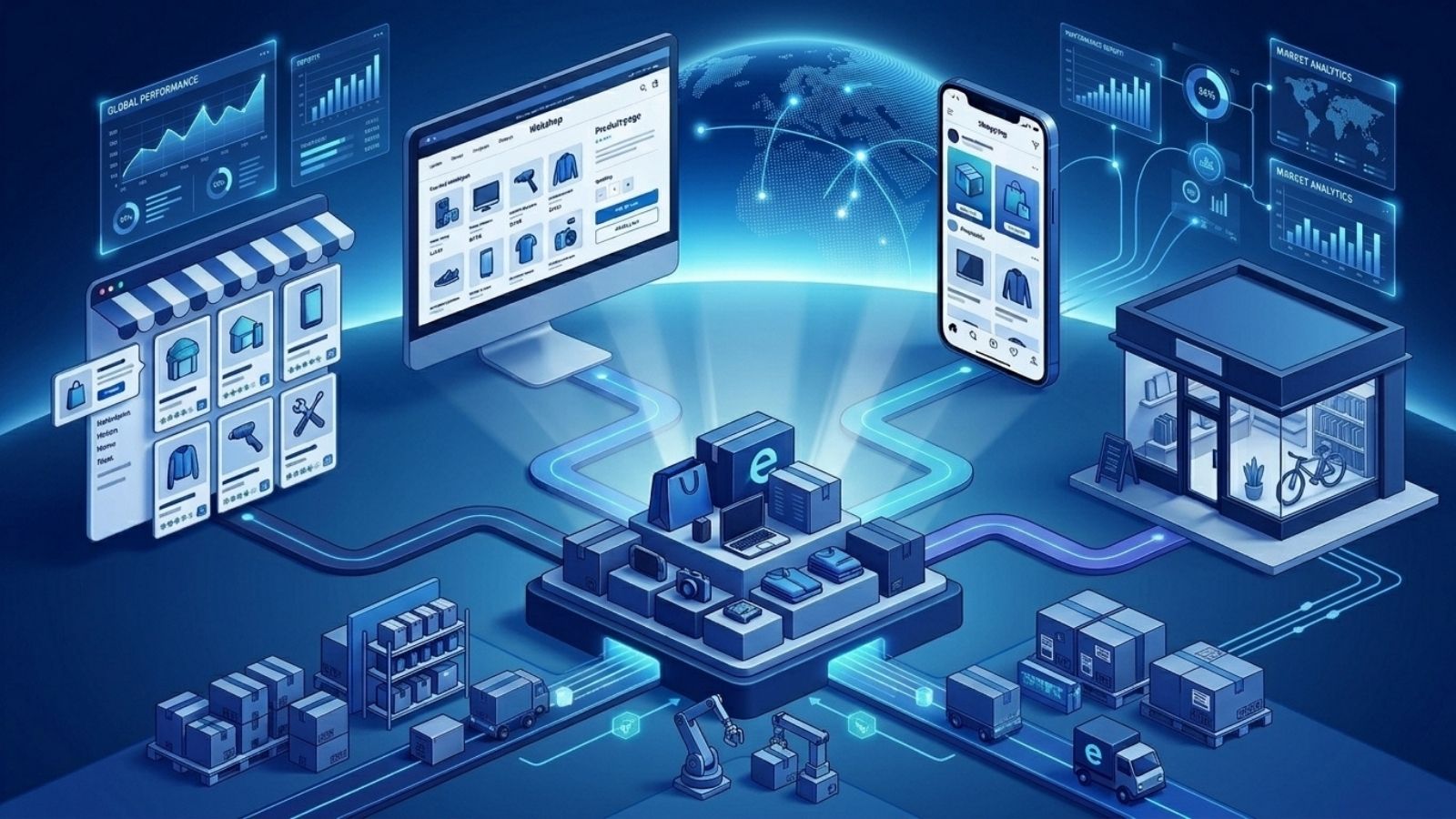
This guide explains what multichannel ecommerce is, how it differs from omnichannel, the benefits and challenges, and how to run it without losing control of your operation.
What Is Multichannel Ecommerce?
Multichannel ecommerce is a sales approach where a brand lists and sells its products on more than one channel at the same time. Those channels typically include marketplaces such as Amazon, Zalando and eBay, your own direct-to-consumer webshop, social platforms like TikTok Shop, and in some cases physical retail.
Each channel reaches a different pocket of demand, so the goal is presence where shoppers are already searching rather than pulling everyone to one site.
In a multichannel model, each channel usually runs on its own terms, with its own listings, inventory view and customer contact. That independence is what makes the approach quick to expand, and also what creates the operational work of keeping everything aligned.
Brands that want a partner to run this for them often turn to a specialist marketplace accelerator that owns the day-to-day execution across channels.
How Does Multichannel Differ From Omnichannel?
Multichannel and omnichannel ecommerce differ in how connected the channels are. In multichannel ecommerce, each channel operates independently, with its own listings, stock view and customer experience.
Omnichannel connects those channels into one system, so inventory, data and the buyer journey stay consistent wherever the customer shops. Multichannel is about reach across many channels; omnichannel is about a unified experience across them.
Neither approach is automatically better. Many brands start multichannel to grow quickly, then add omnichannel connections as the operation matures and a consistent experience becomes worth the extra integration.
Which Channels Make Up a Multichannel Strategy?
A multichannel strategy usually combines marketplaces, a direct-to-consumer webshop, social commerce and sometimes physical retail. Each plays a different role, and the right mix depends on where your buyers already shop. The main channels include:
- Marketplaces: Platforms like Amazon, Zalando, eBay and Noon supply built-in demand and high purchase intent, which makes selling across global marketplaces a core channel for most brands.
- Your own webshop: A direct-to-consumer store gives you ownership of the brand experience and the customer relationship.
- Social commerce: Channels such as TikTok Shop turn product discovery into a direct sale inside the app.
- Physical retail: Stores and stockists remain a channel for brands that sell offline as well as online.
Not every brand needs all four. Digitally native brands often lead with marketplaces, while established names layer channels onto an existing webshop as they expand.
What Are the Benefits of Multichannel Ecommerce?
The benefits of multichannel ecommerce come down to reaching more buyers while spreading your risk across channels. Selling in more than one place widens your audience and reduces your dependence on any single platform. The main advantages are:
- Wider reach: You put products in front of shoppers on the channels they already use instead of waiting for them to find your site.
- Lower risk: A policy change or slowdown on one channel does less damage when revenue is spread across several.
- More resilience: Different channels peak at different times, which smooths demand across the year.
- Room to test: Existing listings can be extended to a new channel to gauge demand before committing further.
The trade-off for that reach is complexity, which is why the choice of channel matters as much as the number. It is worth weighing each channel against your own store, and our guide on ecommerce platform vs marketplace works through where each model earns its place.
What Are the Challenges of Multichannel Ecommerce?
The challenges of multichannel ecommerce are mostly operational, because every channel you add multiplies the data and the exceptions your team has to manage. When channels run independently, small inconsistencies turn into lost sales and unhappy customers. The common problems are:
- Overselling: Stock that is not synced in real time can sell on two channels at once, leading to cancellations.
- Inconsistent listings: Product content and pricing can drift apart when each channel is updated by hand.
- Fulfilment complexity: Each channel sets its own delivery expectations, so orders need routing and tracking that keeps pace.
- Limited visibility: Managing disconnected dashboards makes it hard to see performance across the whole operation.
- Channel compliance: Marketplaces set their own service standards, and missing them can restrict or suspend your listings.
These problems are solvable, but only with the right systems or the right partner behind the operation. Left unmanaged, they scale faster than the revenue does.
How Do You Manage Multichannel Ecommerce?
Managing multichannel ecommerce means keeping listings, inventory and fulfillment aligned across every channel so the operation runs as one system rather than several. The work splits into three connected areas, and weakness in any one of them shows up quickly in ratings and cancellations.
1. Product Listings Across Channels
Product listings across channels need to stay accurate and consistent even though each platform has its own format. Titles, images, attributes and descriptions often have to be reshaped per channel, which is manual and error-prone at scale.
Many brands centralise this in a product information system so a single change updates every channel at once, keeping content correct as the catalogue grows.
2. Multichannel Inventory Synchronisation
Multichannel inventory synchronisation keeps stock levels accurate across every channel in real time so you do not sell the same unit twice. Without it, availability drifts from physical stock and overselling follows, which triggers cancellations and damages seller ratings.
Reliable synchronisation ties each channel back to a single stock view, a discipline our guide to ecommerce warehouse management covers in more depth.
3. Multichannel Order Fulfilment
Multichannel order fulfilment routes each order to the right stock and carrier while meeting the delivery promise of the channel it came from. Different marketplaces set different service levels, so orders need to be prioritised and tracked accordingly.
Consistent fulfilment protects ratings and repeat purchases, because late or incorrect orders undo the reach that multichannel selling creates.
Multichannel Software vs a Managed Partner
The choice between multichannel software and a managed partner comes down to whether you want tools to run the operation yourself or a partner to run it for you. Software centralises listings, inventory and orders in one place, but your team still operates it and carries the strategy.
A managed partner takes on the execution across channels, so the operational load moves off your team entirely. Software suits brands with the in-house capacity and expertise to run channels day to day.
A managed model suits brands that would rather keep their team focused on the product while a specialist runs the channels, and our guide to managed ecommerce sets out how that arrangement works. The right answer depends on how much of the operation you want to own.
Accelerating Multichannel Growth With Pattern
Pattern helps brands grow across channels as an accelerator, taking on the day-to-day marketplace work rather than handing you another tool to run. We buy your stock and sell it across the marketplaces where your customers shop, and we run advertising, content, fulfillment, brand protection and international expansion as one connected operation.
Because we only grow when your brand grows, our incentives sit alongside yours: when a brand wins, Pattern wins. That model keeps execution consistent across more than 70 marketplaces and 100 countries, supported by our own ecommerce data and technology. Book a strategy call to see how Pattern can grow your brand across global marketplaces.
Frequently Asked Questions
What Is an Example of Multichannel Ecommerce?
An example of multichannel ecommerce is a brand selling the same products on Amazon, its own webshop and TikTok Shop at the same time. Each channel reaches a different set of shoppers and operates on its own terms, while the brand coordinates listings, stock and fulfilment behind the scenes so the products stay available and consistent everywhere.
What Is Multichannel Ecommerce Software?
Multichannel ecommerce software centralises the work of selling on several channels, usually covering listing management, inventory synchronisation and order handling from one dashboard. It connects your channels to a single hub so updates and stock levels stay aligned. It reduces manual work, but your team still operates the tool and owns the day-to-day strategy.
Is Multichannel Ecommerce Right for a Growing Brand?
Multichannel ecommerce suits most growing brands, because it spreads reach and reduces reliance on a single channel. It fits digitally native brands expanding onto marketplaces and established names adding channels to an existing webshop. The main question is not whether to go multichannel, but whether you have the systems or the partner to manage the added complexity well.
How Do You Start Selling on Multiple Channels?
You start selling on multiple channels by choosing where your buyers already shop, then adding one channel at a time rather than all at once. Set up the seller account, prepare listings in the channel's format, and connect stock so availability stays accurate. Testing one channel first lets you fix fulfilment and pricing before you scale to the next.
How Do You Avoid Overselling Across Channels?
You avoid overselling across channels by syncing inventory in real time so every channel reads from a single stock view. When a sale on one channel updates availability everywhere instantly, the same unit cannot be sold twice. Brands achieve this with inventory software or a partner that connects each channel back to one source of truth for stock.