







Product Master Data Management: Complete Guide
Product master data management (PMDM) keeps product data accurate, consistent and accessible across every system and every sales channel a brand sells through. For brands selling on marketplaces, that data is not just an internal record. It is the listing, the search result and the compliance evidence all at once.

What is product master data management?
Product master data management is the discipline of creating and maintaining one authoritative record for every product a business sells, then distributing that record to every system and channel that needs it.
It is the product-specific domain within master data management, which covers the same principles for customers, suppliers and other core business entities. PMDM narrows that scope to the attributes that define a product: What it is, how it is identified, how it is described and how it is sold. The purpose is a single source of truth.
Without one, the same product carries different weights in your ERP, different descriptions on your website and different attributes on each marketplace, and every one of those versions is defensible to the team that created it. PMDM removes that ambiguity by making one record authoritative and everything else a copy of it.
What does product master data include?
Product master data includes the core attributes that identify, describe and classify a product, held at a level that stays stable across channels. It excludes anything that is channel-specific or campaign-specific, such as marketplace-optimised titles or seasonal imagery, which belong in a downstream layer.
Most product master records break down into five groups:
- Identification attributes: GTIN, EAN, MPN, internal SKU and brand, which tell every system that two records refer to the same physical product.
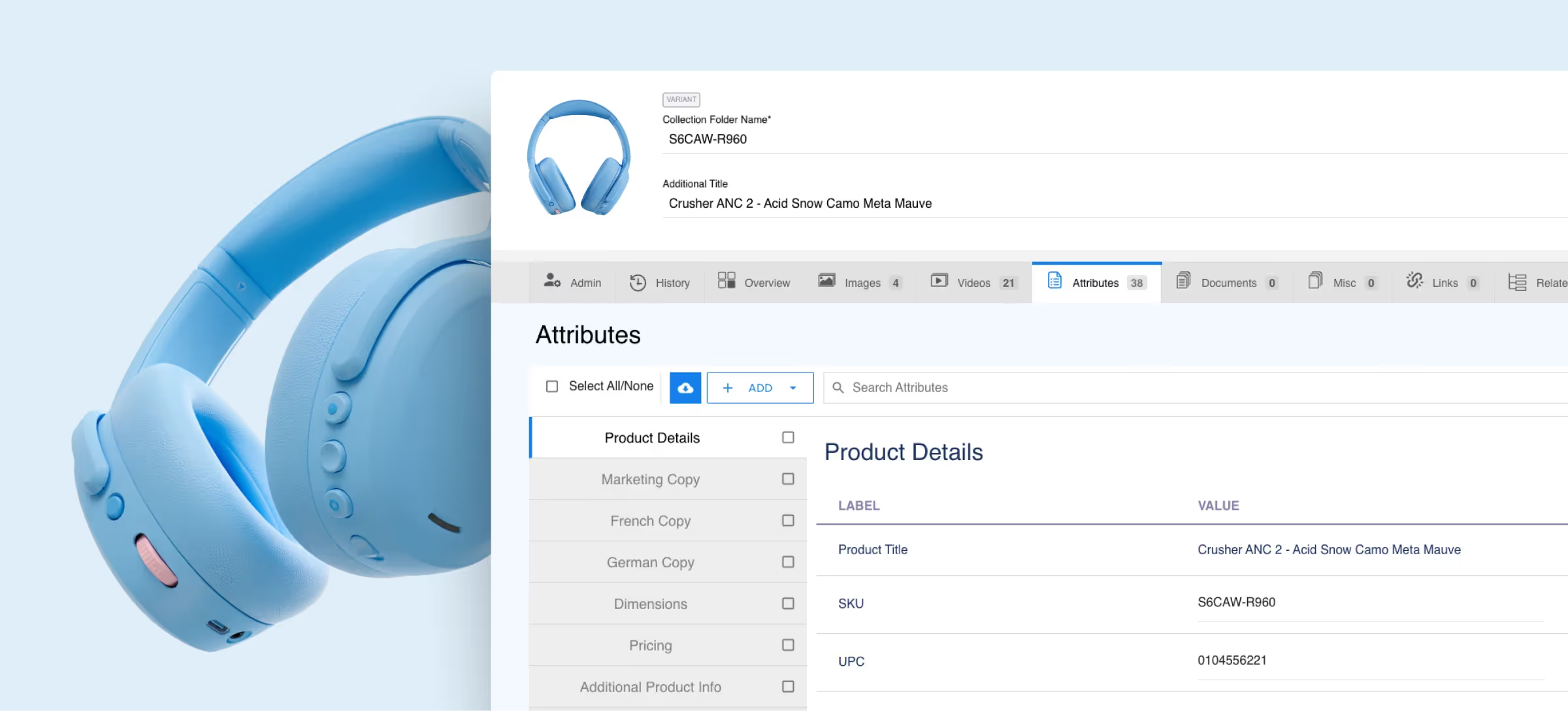
- Descriptive attributes: Product name, category, material, colour, size and features, which drive filtering and comparison.
- Logistics attributes: Net and gross weight, packaged dimensions, case pack quantity and hazardous goods flags, which drive storage, shipping and marketplace fulfilment eligibility.
- Commercial attributes: Your own list price, currency, country of sale and availability status, held as your record of what you publish.
- Linked assets: References to images, videos and documents, which are stored and versioned in a digital asset management system rather than inside the master record itself.
A product master data model is the structure that holds those groups together. It defines which attributes exist, which are mandatory, what format each one takes and how variants relate to their parent product.
GS1 formalises this in its Global Data Model, which organises attributes into four layers: Global Core attributes that apply to every category worldwide, Global Category attributes that apply to one category worldwide, Regional Category attributes and Country or local attributes.
The Consumer Goods Forum identified roughly 180 GDSN attributes as critical to verifying, listing, ordering, storing and selling a product. Starting from an established model rather than an internal spreadsheet saves most of the work of deciding what a complete record looks like.
Why does product master data management matter on marketplaces?
Product master data management matters on marketplaces because your data is the only thing the shopper sees. There is no showroom, no salesperson and no second chance to explain what the product actually is. If an attribute is missing, the product drops out of the filter. If it is wrong, the customer finds out after delivery.
The commercial effect is measurable. Research conducted by YouGov across more than 8,500 consumers in 2025 found that 80% of UK shoppers form a more negative view of a brand when they encounter incomplete or inaccurate product information online, compared with 85% in France and 65% in Germany.
Around three in ten European consumers reported being disappointed by a purchase in the previous six months because it did not match its online description, and roughly one in five returned a product for that reason.
The internal cost runs alongside it. Gartner put the average annual cost of poor data quality at 12.9 million dollars per organisation in its 2020 assessment, spread across rework, delays and decisions taken on numbers that were never right.
In a marketplace operation that shows up as suppressed listings, blocked shipments at the fulfilment centre and hours spent reconciling catalogues by hand.
What are the benefits of implementing PMDM?
The benefits of implementing PMDM compound as channel count rises. A brand on one webshop can manage product data in a spreadsheet. A brand on eight marketplaces across five countries cannot, and the gap between those two situations is where PMDM earns its place.
- Consistency across channels: The same specification appears on your own site, in your retail partners' catalogues and on every marketplace listing, because all of them draw from one record.
- Fewer avoidable returns: When the listing matches the product, the most controllable category of return disappears.
- Faster launches and market entries: A complete master record can be mapped to a new marketplace template in a fraction of the time it takes to assemble one from scratch.
- Compliance you can evidence: Regulatory attributes sit in a governed system with an audit trail, rather than in the memory of whoever set the product up.
- Better decisions: Margin, inventory and assortment analysis is only as reliable as the product records underneath it.
Taken together, these turn product data from a recurring cost into infrastructure that supports growth rather than slowing it.
What is the difference between product MDM, PIM and PXM?
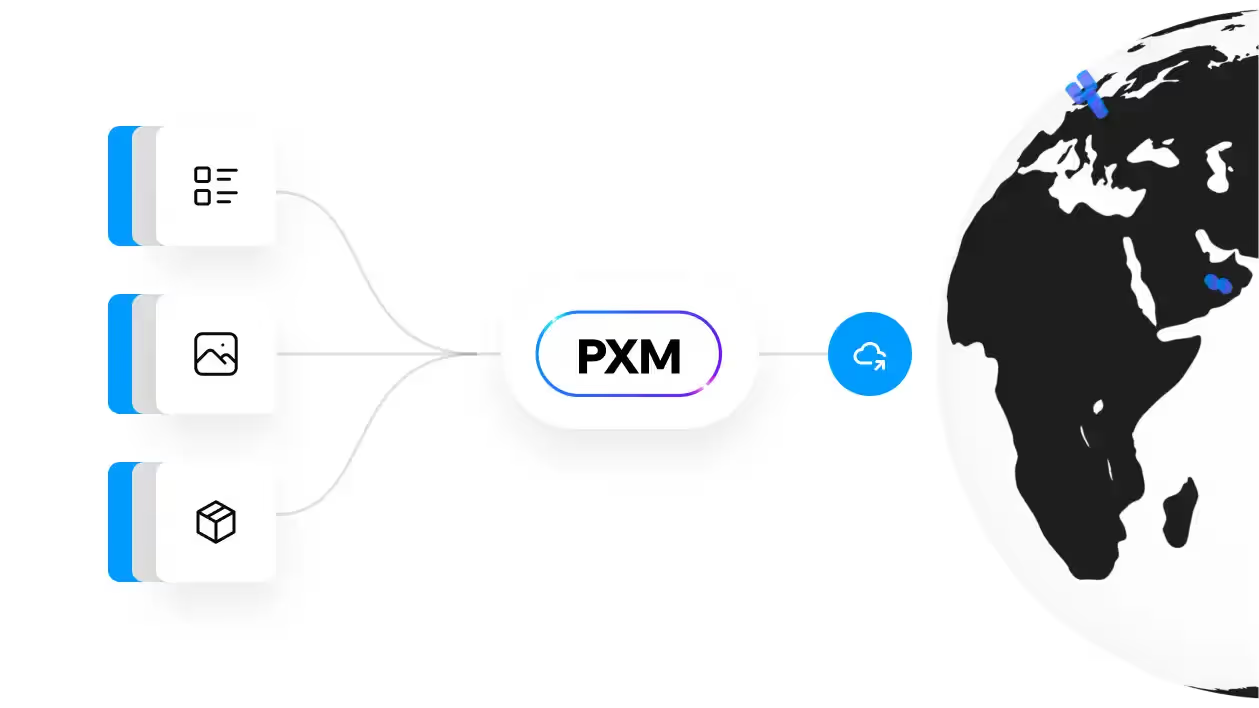
The difference between product MDM, PIM and PXM is where each one sits in the pipeline rather than what each one replaces. Master data management governs the authoritative record, product information management enriches that record into channel-ready content, and product experience management tailors and distributes that content to each channel and measures how it performs.
The distinction matters when things go wrong. A wrong weight is a master data problem and fixing it in one marketplace listing solves nothing.
A weak product description is a content problem and belongs in the enrichment layer. Teams that treat all product data issues as one category tend to fix symptoms in the channel and leave the source untouched.
How do you implement product master data management?
You implement product master data management best as a narrow first pass across your highest-value products rather than as a full catalogue programme. The four steps below focus on the product domain specifically.
If you also need to establish ownership, policies and stewardship across other data domains, our guide to the master data management framework covers that groundwork.
1. Define your product attribute standard
Start by deciding what a complete product record looks like in your business. Set the mandatory and optional attributes per category, fix the units and formats, and write down the naming conventions so that two people setting up the same product produce the same record.
Anchoring this to the GS1 Global Data Model rather than inventing a structure saves rework later, because it is the structure your retail and marketplace partners already expect.
2. Map your source systems
Identify every system that currently creates or holds product data, which usually means ERP, your ecommerce platform, supplier files and a longer list of spreadsheets than anyone expects.
For each attribute, decide which system is the authoritative source and which systems consume it. Where two systems both claim ownership of the same field, that conflict has to be settled before any migration begins, not during it.
3. Set validation rules per channel
Each marketplace enforces its own required attributes, character limits and permitted values, and a record that is complete by your internal standard can still be rejected downstream.
Build those channel rules into validation at the point of entry so that incomplete records are caught before they reach a listing queue. Pay particular attention to the attributes that block fulfilment, such as weights, dimensions and restricted goods flags.
4. Monitor completeness continuously
Product data degrades: Suppliers change specifications, packaging changes and new variants arrive without complete records. Track attribute completeness and accuracy as a standing metric per category and per channel, with alerts for records that fall below threshold.
Reviewing this monthly keeps the catalogue stable; reviewing it annually means discovering problems through suppressed listings instead.
What product master data do marketplaces require?
Marketplaces require a valid product identifier plus the category-specific attributes that determine where a product can appear. Amazon, Zalando and bol all require a GTIN to list a product in most categories, and marketplaces use GS1 records to verify product identity, group sellers onto the same product page and detect duplicate or invalid identifiers in their catalogues.
A record without valid identification does not just rank poorly, it often cannot be created at all. Beyond identification, the category attributes do the quiet work. Missing a size, material or compatibility attribute removes the product from the filtered results where high-intent shoppers actually browse, even though the listing itself remains live and looks complete to the seller.
The same completeness now shapes how AI shopping assistants surface products, because those systems read structured attributes to answer comparison questions rather than parsing marketing copy. Channel-level content work can only patch the symptoms of a weak master record, never the cause.
What does EU regulation require from product data?
EU regulation requires product data to be structured, traceable and available to the consumer before they buy. The General Product Safety Regulation (EU) 2023/988 has applied since 13 December 2024 and sets out, in Article 19, the product information that must be shown when a product is offered through distance selling.
It places duties on manufacturers, importers, distributors, fulfilment service providers and online marketplaces, and it applies in the EU and Northern Ireland rather than in the rest of the UK.
The Ecodesign for Sustainable Products Regulation (EU) 2024/1781, in force since 18 July 2024, adds the Digital Product Passport. Requirements arrive per product category through delegated acts rather than all at once.
The first fixed deadline is the battery passport, which applies from 18 February 2027 to LMT batteries, industrial batteries above 2 kWh and electric vehicle batteries. For textiles and apparel, the Commission's 2025 to 2030 working plan gives 2027 as an indicative year for adoption of the measure, which is a target for the act rather than a universal compliance date.
What both have in common is that they assume a brand can produce structured, traceable product data on demand. That is straightforward with a governed product master and close to impossible without one. This is general information rather than legal advice, so confirm the requirements that apply to your categories with your own compliance advisers.
How is product master data used across buy-side, inside and sell-side?
Product master data is used differently across the buy-side, inside and sell-side, and a PMDM programme that only satisfies one of the three tends to stall. Mapping the use cases early makes it clear who has to be in the room.
- Buy-side: Procurement and supply teams rely on consistent supplier and item records to order accurately, compare like for like and avoid duplicate part numbers across vendors.
- Inside: Operations, finance and supply chain teams need one product view to plan inventory, reconcile margin and forecast demand without first agreeing which system is correct.
- Sell-side: Ecommerce, marketplace and marketing teams need complete, channel-ready records to publish listings that pass validation and stay consistent wherever a shopper encounters them.
The sell-side case has an extra wrinkle for brands selling through a marketplace partner. Ownership of the master record should stay with the brand while the partner handles channel mapping and publication, so that expanding to a new marketplace never means rebuilding the product catalogue from scratch.
How Pattern approaches product master data management
Pattern approaches product master data as the foundation of marketplace performance rather than as a separate IT project. Our PXM offering brings product content, digital assets and syndication together, so that one governed record feeds every marketplace and every region a brand sells in, with the channel-specific mapping handled for you.
If your catalogue is spread across systems and each marketplace has become its own version of the truth, that is a solvable problem and usually a quicker one than it looks. Book a strategy call and we will look at your product data and where it is costing you.
Patterns Master Data Management Solution
It’s time to take control of your product data, streamline operations, and—most importantly—keep customers happy. Accelerate your success today with Pattern’s master data management solution.


Frequently Asked Questions
How does product MDM differ from customer or other MDM domains?
Product MDM differs from other MDM domains in what it governs: Product records rather than people or organisations. It manages identifiers, specifications, logistics attributes and classifications, where customer MDM manages profiles, contact records and consent. The governance principles are shared, but the attributes, the validation rules and the systems that consume the data are entirely different.
What are the main components of a PMDM strategy?
The main components of a PMDM strategy are an attribute standard, a defined source of truth per attribute, validation at the point of entry, integration with the systems that consume product data, and continuous monitoring of completeness. Ownership sits across those components rather than in one team, which is why cross-functional agreement tends to matter more than tooling.
Do I need a GTIN to sell on marketplaces?
You do need a GTIN to sell on most marketplaces, including Amazon, Zalando and bol, in the majority of product categories. Brand owners and manufacturers obtain GTINs from GS1, while resellers use the identifier already assigned by the brand owner. Marketplaces use these identifiers to keep their catalogues free of duplicates and to verify that a product is what it claims to be.
What does the GPSR mean for product data?
The GPSR means that specific product information has to be present and visible on a listing before a consumer buys. Regulation (EU) 2023/988 has applied since 13 December 2024 and covers manufacturers, importers, distributors, fulfilment service providers and online marketplaces, in the EU and Northern Ireland. In practice it turns traceability attributes into fields that must be populated and kept current rather than optional extras.
What challenges do organisations face when implementing PMDM?
The challenges organisations face when implementing PMDM are usually organisational rather than technical. Legacy records are incomplete, two teams disagree about which system is authoritative, and nobody owns product data as a job rather than as an addition to one. Scoping the first phase to a single category and a single channel makes the programme deliverable and gives the wider rollout evidence to build on.
How does PMDM integrate with other enterprise systems?
PMDM integrates with other enterprise systems by acting as the source that ERP, PIM, ecommerce platforms and marketplace connectors read from rather than write to. Data flows outward from the master record on a scheduled or real-time basis, and changes are made in one place. That direction of flow is what prevents the same product ending up with a different specification in each system.