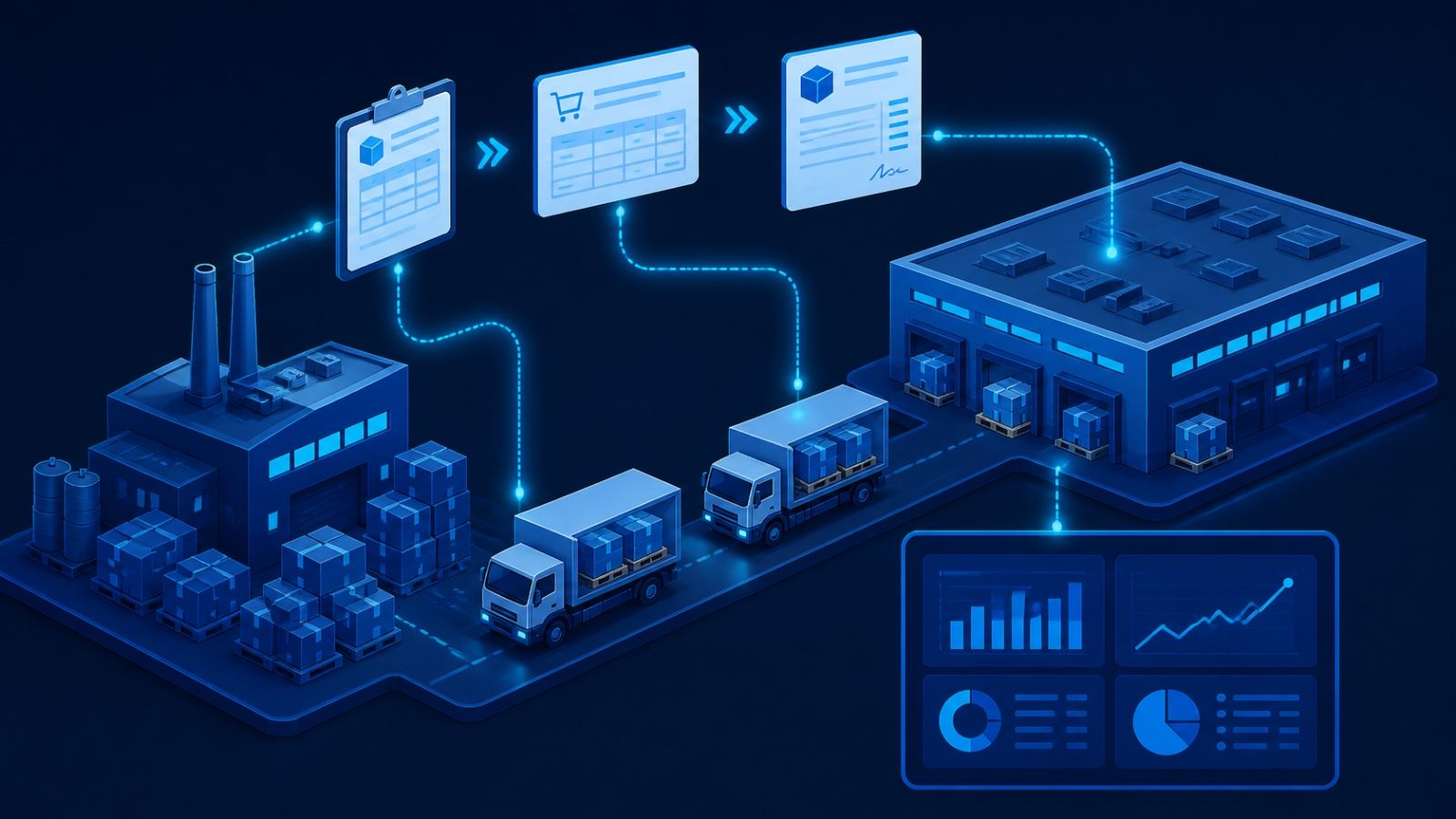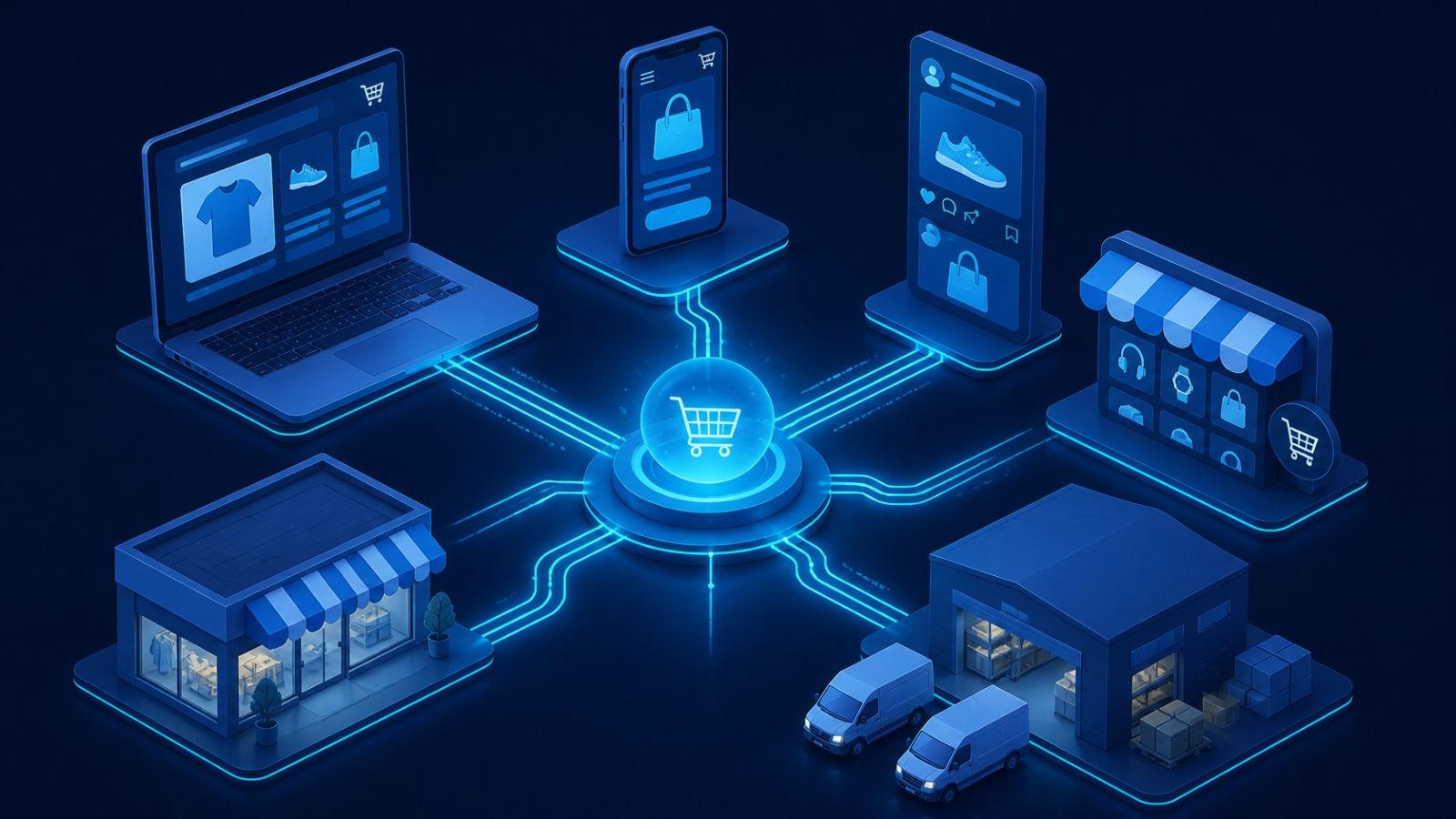





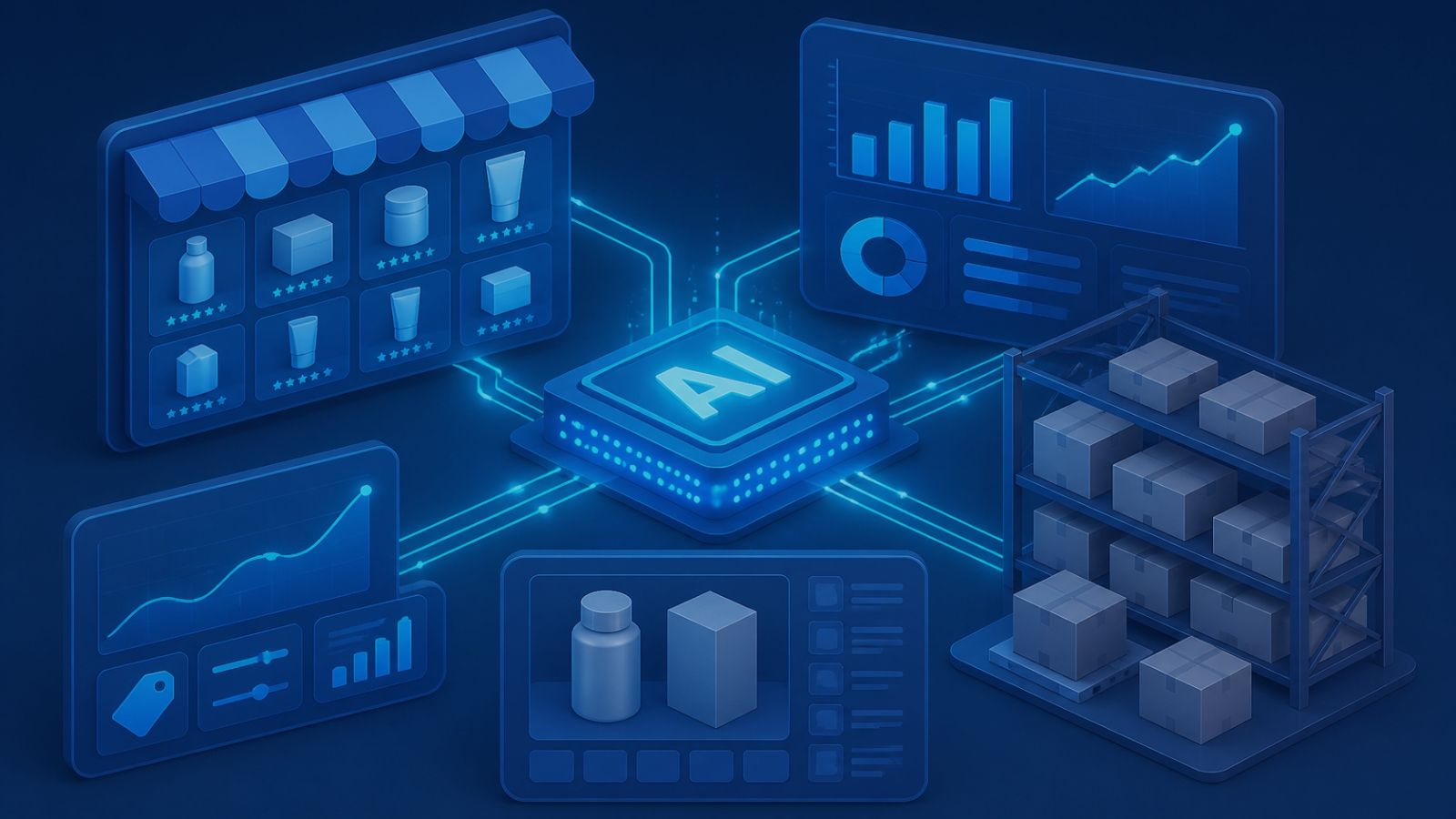
It also shapes where shoppers discover products, now that assistants such as Amazon's Rufus and ChatGPT answer questions that once went to a search bar. This guide explains the types, use cases, examples, risks and rules your brand needs to know.
What Is AI in Ecommerce?
AI in ecommerce is the use of artificial intelligence to analyse commerce data and to make or support decisions across the online sales journey. Those decisions cover what shoppers see, which ads run and where stock sits.
An AI brand intelligence platform brings them together, so your team sees what changed overnight and why. For a brand selling on Amazon, Zalando or TikTok Shop, AI works on two sides. The marketplace's own AI decides which products shoppers find, and your AI decides how you respond.
A useful way to frame it is the revenue equation: Revenue = Traffic x Conversion x Price x Availability. Every AI use case improves one of those four levers.
Which Types of Artificial Intelligence Power Ecommerce?
Three types of artificial intelligence power ecommerce today: machine learning, generative AI and conversational AI.
Each type solves a different problem, and most marketplace tools combine all three. Agentic AI builds on these types by taking actions rather than only giving answers; we cover it further down in this guide.
Machine Learning in Ecommerce
Machine learning in ecommerce finds patterns in historical data and turns them into predictions. It forecasts demand per marketplace, scores which search terms convert and flags anomalies such as a sudden drop in Buy Box share.
Machine learning has powered recommendations and ad bidding for years, which makes it the least visible but most widely used type of ecommerce AI.
Generative AI for Ecommerce Content
Generative AI for ecommerce content creates product titles, bullet points, A+ content and lifestyle images from product data and prompts. Large language models make it possible to localise a listing for Germany, France and Spain in hours instead of weeks.
The output depends on the input: accurate attributes and clear brand guidelines produce listings that convert, while thin data produces generic copy.
Conversational AI in Online Shopping
Conversational AI in online shopping lets shoppers ask questions in natural language and receive product answers. Natural language processing (NLP) reads the intent behind a question such as "which running shoe suits flat feet?" and matches it to products, reviews and specifications.
On marketplaces, conversational AI now sits inside the shopping app itself, which changes how your listings need to be written.
How Is AI Used in Ecommerce?
AI is used in ecommerce wherever large volumes of data meet repetitive decisions, such as bidding on thousands of keywords or forecasting stock for hundreds of SKUs. The use cases below follow the revenue equation lever by lever, so you can see where AI moves the numbers for your brand.
How Does AI Drive Ecommerce Traffic?
AI drives ecommerce traffic by deciding which shoppers see your products and at what cost. On marketplaces, machine learning adjusts bids, budgets and targeting across sponsored ads many times a day.
AI-driven marketplace advertising technology goes a step further by measuring incremental return, so spend shifts towards campaigns that create new sales rather than sales you would have won anyway.
How Does AI Improve Ecommerce Conversion?
AI improves ecommerce conversion by making each product page more complete, relevant and consistent. It audits listings against category best practice, spots missing attributes and drafts copy in the language of each market.
With product experience management software, those improvements flow from one central source to every channel you sell on, instead of being fixed listing by listing.
How Does AI Support Ecommerce Pricing Decisions?
AI supports ecommerce pricing decisions by monitoring Buy Box ownership and competing offers around the clock. A model can flag the moment an offer loses the Buy Box or demand shifts, then suggest a response for a person to review.
Each seller sets its own prices independently. The UK's Competition and Markets Authority (CMA) has warned that autonomous pricing systems used across businesses can create a risk of collusion, so human oversight matters here.
How Does AI Protect Ecommerce Availability?
AI protects ecommerce availability by forecasting demand and spotting supply problems before they turn into stockouts. Forecasting models combine sales history, seasonality, promotions and lead times per marketplace and fulfillment centre.
Monitoring tools catch suppressed listings or stranded inventory within hours. Our guide to AI inventory forecasting for ecommerce explains how brands use these models to reduce both stockouts and overstock.
What Are Examples of AI in Ecommerce?
The clearest examples of AI in ecommerce come from the marketplaces themselves. Amazon and Zalando have built AI into both the shopper experience and their seller tools, and those choices set the rules your brand plays by. The three examples below show how far that has gone.
Amazon's AI Shopping Assistant
Amazon's AI shopping assistant, Rufus, answers shopper questions using Amazon's product catalogue, customer reviews and information from across the web.
Amazon launched Rufus in the UK in September 2024. In the US, Amazon folded Rufus into Alexa for Shopping in May 2026, adding price tracking, recurring orders and purchases that trigger when a price drops. Amazon has also introduced sponsored products inside these conversations.
AI Seller Tools on Amazon
AI seller tools on Amazon now act on a seller's behalf instead of only answering questions. In September 2026, Amazon added always-on workflows and long-term memory to Seller Assistant, which reasons across inventory, advertising, listings and compliance.
Amazon says Seller Assistant has reached more than 90% of its selling partners worldwide. Since March 2026, Amazon's Agent Policy also sets rules for AI agents that access Amazon on a seller's behalf.
The Zalando AI Assistant
The Zalando AI assistant helps shoppers find fashion and beauty products through conversation, in the local language of each market. A shopper can describe an occasion, a destination and the expected weather, and the Zalando Assistant suggests matching items.
By May 2026, around 10 million customers had asked the Assistant for advice that year. For brands, product data now needs to describe occasions and fit, not only colour and size.
How Is AI Search Changing Ecommerce Discovery?
AI search is changing ecommerce discovery by moving the first product question from a search bar to an AI assistant. According to Adobe, traffic from generative AI platforms to UK retail sites grew by 1,439% between October 2024 and August 2026.
In August 2026, that traffic converted 20% better than non-AI traffic, and 37% of UK consumers now use AI assistants to shop. AI search for ecommerce rewards different signals than a classic results page.
Assistants favour complete product data, consistent claims across channels, credible reviews and content that answers real questions. Improving brand discoverability therefore starts with checking how assistants such as ChatGPT and Gemini describe your products, then closing the gaps they reveal.
What Is Agent-Driven Ecommerce?
Agent-driven ecommerce is commerce in which an AI agent researches, compares and buys products on a shopper's behalf. Instead of returning links, the agent completes tasks, such as reordering pet food or buying once a price falls. Agent-driven ecommerce spend is still at an early stage, and the first experiments show that the infrastructure is moving faster than shopper behaviour.
Two open protocols compete to connect agents with merchants. OpenAI and Stripe launched the Agentic Commerce Protocol (ACP) in September 2025; OpenAI wound down its in-chat Instant Checkout in March 2026, but the protocol continues. Google and Shopify introduced the Universal Commerce Protocol (UCP) in January 2026, with checkout live in the US and the UK set to follow.
Amazon takes its own route by building agentic features into its own assistant and limiting access for many outside bots. For brands, the practical step is the same on every route: accurate, machine-readable product data that any AI agent can trust and compare.
What Are the Benefits of AI-Powered Ecommerce?
AI-powered ecommerce gives brands five practical benefits when the data and the oversight are in place:
- Faster decisions: Models surface what changed overnight and why, so teams act in the morning instead of after a weekly report.
- Scale across markets: One team can maintain listings, ads and forecasts across dozens of marketplaces and languages.
- More relevant shopper experiences: Recommendations and conversational search match products to intent rather than to exact keywords.
- Fewer manual errors: Automated checks catch missing attributes, suppressed listings and stock gaps earlier.
- Better use of ad spend: Measuring incremental return shows which campaigns create new demand.
The benefits of AI in ecommerce depend on data quality. A model trained on incomplete sales or catalogue data automates the wrong decisions faster, which is why the data foundation comes before the tool.
What Are the Risks of Ecommerce AI?
Ecommerce AI carries four main risks that a brand needs to manage from the start:
- Inaccurate output: Generative AI can invent product claims, so every listing needs a review step before it goes live.
- Poor data: Gaps and errors in catalogue or sales data lead to wrong forecasts and wrong bids.
- Loss of control: Autonomous actions without approval limits can change listings or budgets in ways your team cannot explain.
- Regulatory exposure: Consumer-facing AI falls under consumer protection and AI transparency rules in the UK and the EU.
Managing these risks comes down to guardrails: clear limits on what AI may change by itself, a full log of what it did and a person who signs off on high-impact decisions.
How Does AI Regulation Affect Ecommerce in Europe?
AI regulation affects ecommerce in Europe mainly through transparency and consumer protection rules. The EU and the UK take different routes, but both hold the business responsible for what its AI does. The table below summarises what applies to ecommerce brands today.
The EU's Digital Omnibus, in force since 27 July 2026, moved the high-risk AI obligations to December 2027 and August 2028 but left the transparency rules in place. AI systems that were already live before August 2026 have until 2 December 2026 for machine-readable marking of AI-generated content. Check your own obligations with your legal team.
How Does Pattern Use AI for Ecommerce Brands?
Pattern uses AI for ecommerce brands as part of the 3P Marketplace Accelerator, an end-to-end partnership rather than a standalone tool.
Because we buy your inventory and invest our own capital, our technology and our teams are aligned with your growth across 70+ marketplaces and 100+ countries. Pattern Intelligence (Pi) runs on 77T+ proprietary data points and turns overnight performance into a plain-language daily brief.
Pi works within the limits you set. Decisions outside those limits go to Approvals, where your team can approve, deny or request changes, and every automated action appears in a timestamped log. Want to see what AI in ecommerce looks like with a partner behind it? Book a strategy call with our team.
Frequently Asked Questions
How Is AI Changing Ecommerce?
AI is changing ecommerce by shifting product discovery to AI assistants and moving routine work from people to software. McKinsey reports that 38% of European consumers already use generative AI tools to research products and decide what to buy. On the seller side, marketplaces are adding AI agents that monitor accounts and draft changes around the clock.
What Data Does AI in Ecommerce Need?
AI in ecommerce needs clean product data, sales history, advertising data and inventory data to make reliable decisions. Complete attributes feed listings and AI search, while sales history across full seasons helps forecasts capture peaks. The breadth of data matters too: a model trained across many brands and categories recognises patterns that a single brand's data cannot show.
Will AI Replace Ecommerce Teams?
AI will not replace ecommerce teams, but it changes what an ecommerce business's team spends its time on. Software takes over monitoring, reporting and repetitive listing work, while people keep ownership of strategy, brand decisions and partner relationships. Many marketplace AI tools already work that way, with AI drafting changes and a person approving them.
Is AI-Generated Product Content Allowed on Amazon?
AI-generated product content is allowed on Amazon, and Amazon offers its own generative AI tools to create listings, A+ content and lifestyle imagery. The seller remains responsible for the accuracy of every claim, so AI-written copy needs the same review as human-written copy. Unverified health or performance claims are a risk whoever writes them.
How Do You Measure the Impact of AI in Ecommerce?
You measure the impact of AI in ecommerce by comparing one defined metric before and after the AI goes live, against a control group where possible. Useful metrics follow the revenue equation: incremental ad return for traffic, conversion rate for content and in-stock rate for availability. Track the hours your team saves as well, because time freed for strategy is a real return.